Every CEO eventually reaches a moment when the numbers look fine but the culture does not. The dashboard glows green, the quarterly reports read steady, and the strategy appears to be sound. However, something beneath the surface has begun to slip. Initiative fades. Employee engagement thins. The organization begins to move without conviction, but with obligation. This is the quiet erosion no metric warns you about until it has already reshaped the company.
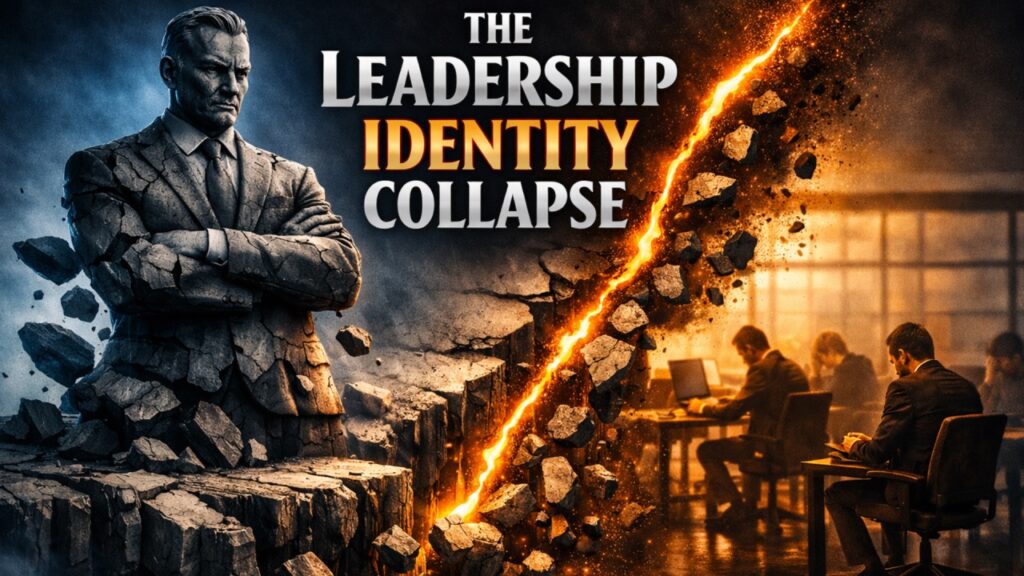
Most leaders misdiagnose the erosion. They call it burnout. Sometimes they believe it is disengagement or even a talent shortage. These are symptoms, they are not causes. The real issue is far more functional. The issue is that your organization is experiencing a leadership identity collapse. Unfortunately, identity collapses do not announce themselves. They reveal themselves through patterns that executives often overlook because they are searching for operational explanations rather than psychological ones.
Leadership is not a function of strategy. Leadership is a function of identity. I have often explained, “Your team will not rise until you rise first. Leadership is a mirror.” If leaders are unclear, teams become confused. If leaders are inconsistent, teams become hesitant. If leaders are exhausted, teams become disengaged. A team does not reflect the company’s mission; it reflects the leader’s mindset. When that mindset fractures, the culture follows.
This is the strategic blind spot costing companies millions. Organizations invest heavily in technology. They invest in workflows and transformative initiatives, yet they overlook the one variable that determines whether any of it works – leadership energy. It is not charisma or enthusiasm; it is energy – the psychological presence leaders bring into the room. “Teams do not lose motivation, they lose leadership energy. Rise and they will rise with you.” When leadership energy falls, culture fractures. This is not philosophy. This is organizational physics.
The problem is that most companies attempt to solve cultural drift with operational solutions. They introduce new software, new communication plans or even new incentives. Maybe they will introduce new workflows. However, when moral continues to slip, they turn to symbolic gestures. They have employee appreciation days. They bring in an ice cream truck. Sometimes they will have catered lunches and branded swag. These events only create a momentary lift. It is a brief sense of novelty, however, these symbolic gestures do not rebuild belief. They do not restore clarity, and they do not reset identity. According to Gallup’s 2023 State of the Global Workplace report, only 23% of employees worldwide are engaged at work, despite billions spent annually on perks and recognition programs. Appreciation without alignment is decoration. Appreciation without leadership is distraction. Culture does not rise because the company handed out ice cream. Culture rises because leaders rise.
Employee disengagement is not a workflow issue. It is a pattern issue. Patterns will not change until leaders do. “Low engagement is a pattern. Reset is the break that starts the rebuild.” Reset is not a retreat or a meeting. Reset is a psychological interruption. It is the moment leaders stop managing symptoms and start addressing the cause. It is the moment the organization stops drifting and starts rising.
Clarity is the next fault line. Confusion is expensive. It kills momentum and suffocates initiative. It also erodes trust. “Confused teams disengage. Clear teams dominate.” Clarity is not about direction. Clarity is about identity. It tells people, “this is who we are, this is how we rise, and this is how we respond when pressure hits.” When leaders respond with clarity, teams respond with excellence. When leaders respond with ambiguity, teams respond with hesitation. Culture is not built through communication; it is built through consistency of identity.
Identity is where most organizations fail. They assume leadership is a skill set. It is not. Leadership is an identity set. A company can only rise to the level of its leaders’ identity – not their experience, tenure or even their technical competence. Their identity. “People do not give their best to leaders who barely show up.” When leaders rise, teams rise. When leaders respond with clarity, organizations accelerate.
This is the revelation most CEOs never receive, and it is the revelation that changes everything once they do. The truth is simple. Your organization is not suffering from a talent problem. It is suffering from a leadership identity problem. No mater how hard you may try, identity problems cannot be solved with operational solutions. They require leaders who are willing to rise, willing to reset, and willing to respond with clarity. If they are willing, they will then rebuild belief at scale.
If you want your company to rise, rebuild the leaders. If you want your culture to change, reset the pattern. If you want engagement to return, restore clarity.
Because leadership does not move projects – leadership moves people. When people rise, the company rises with them.
Richie Rotten is a keynote speaker, identity architect and the creator of the 3-Count Mindset™. You can reach Richie at booking@RichieRotten.com or www.richierotten.com